Why Embodied AI Models Change Everything for Industrial Automation
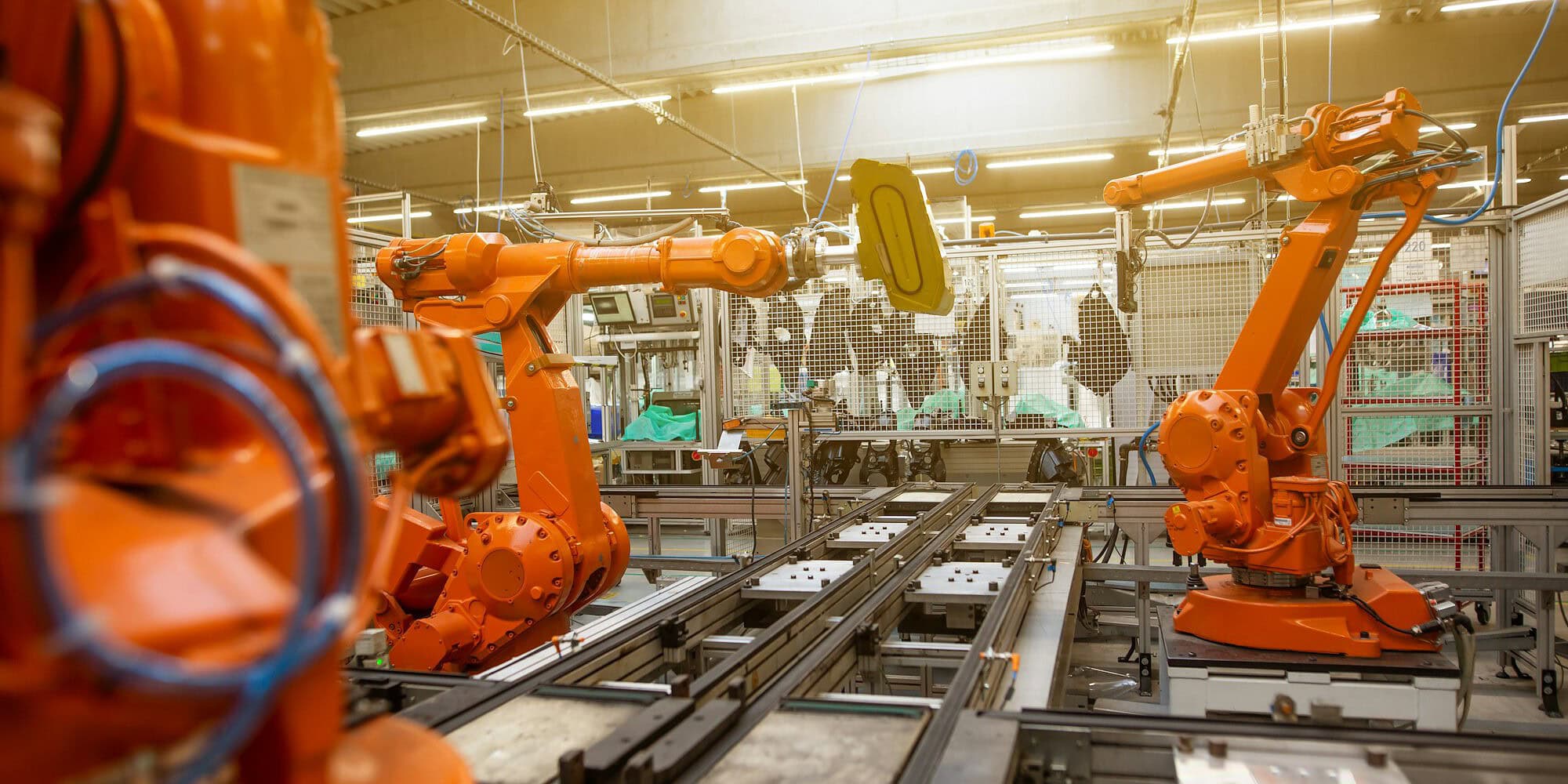
Embodied AI models move robots beyond scripted tasks into adaptive reasoning. Google DeepMind launched Gemini Robotics 2 this week. The system controls everything from tabletop arms to humanoids. This is not an incremental upgrade. It represents a fundamental shift in how machines interact with physical environments. Industrial automation teams must understand what changes and why governance matters before deployment begins.
Traditional industrial robots follow fixed programs. They repeat identical motions thousands of times. Any variation breaks the process. Embodied AI models change this constraint. They perceive their environment. They adjust grip strength based on object weight. They recover from unexpected obstacles without human intervention. Consequently, factories gain flexibility that scripted automation cannot provide.
01 – What embodied AI models actually do
These models combine vision, language, and action into a single system. Gemini Robotics 2 processes camera feeds while planning motor commands. It understands instructions like “pick up the red component and place it in the blue bin”. The model does not need explicit programming for each scenario. It generalizes from training data to handle novel situations. Therefore, deployment time shrinks from months to weeks.
NVIDIA supports this shift with new tools. Isaac GR00T provides open models for robot learning. Cosmos generates synthetic training data. Newton 1.0 offers physics simulation for testing. These infrastructure pieces reduce the cost of training robots for specific production environments. Teams no longer need massive real-world datasets. Simulation bridges the gap between general models and factory-specific requirements.
AI² Robotics demonstrated commercial viability by raising $735 million in Series B funding. Their wheeled humanoid robots target industrial assembly and warehouse logistics. Investors bet that embodied AI models will transform material handling within two years. This capital signals confidence that the technology has moved beyond research labs. Factories will deploy these systems at scale starting in 2027.
Embodied AI models enable robots to reason and adapt in real factories, not just demonstrate in controlled environments.
02 – Why governance must start before deployment
Adaptive robots introduce risks that fixed programs do not have. A scripted robot cannot deviate from its path. An AI-powered robot makes decisions in real time. These decisions might be correct ninety-nine percent of the time. The one percent matters when tons of equipment or human workers are nearby. Governance frameworks must address this uncertainty before systems go live.
The U.S. FCC announced restrictions on imports of foreign-made humanoid robots this week. National security concerns drive the policy. However, the regulation also reflects genuine safety questions about autonomous systems in critical infrastructure. Companies cannot wait for standards to emerge from regulators. They must build governance into their automation projects from day one. As we explored in our article on why governance in AI projects must start earlier than in classic IT, retrofitting rules after deployment creates unnecessary risk.
Japanese manufacturers formed a Domestic Robot Alliance to test cooperative physical-AI control infrastructure. Fujitsu, FANUC, Yaskawa Electric, and Kawasaki Heavy Industries will share safety data and validation methods. This collaboration recognizes that no single company can solve governance alone. Industry-wide standards emerge faster when competitors work together on foundational questions. Other regions will watch this experiment closely.
03 – What project managers should do now
First, audit existing automation for AI readiness. Many factories have sensors and data collection already in place. These assets accelerate embodied AI deployment. Teams that document current workflows can train models faster. Second, identify pilot use cases where adaptability provides clear value. Quality inspection and irregular part handling are strong candidates. Avoid starting with mission-critical processes where failures cause production stops.
Third, establish decision boundaries for autonomous systems. Define what the robot can decide alone and what requires human approval. A robot might adjust its grip force autonomously. It should not change production schedules without oversight. Clear boundaries prevent scope creep in autonomy. They also simplify incident investigation when problems occur. Documentation of these boundaries becomes part of the governance framework.
Fourth, plan for continuous monitoring. Embodied AI models improve with data. They also drift as conditions change. Teams must track performance metrics continuously. Anomaly detection catches degradation before failures occur. This monitoring requirement differs from traditional automation validation. Fixed programs need testing once. Adaptive systems need observation forever. Budget and staffing must reflect this ongoing commitment.
Research from NVIDIA’s National Robotics Week highlights that physical AI adoption accelerates when simulation and real-world testing combine. Companies that master this cycle deploy robots faster and safer. The technology exists today. The question is whether organizations build the governance to use it responsibly. Embodied AI models will transform industrial automation regardless. Teams that prepare now will lead the transition. Teams that wait will struggle to catch up.